Minesweeper Patterns Guide: 1-2-1, 1-1, Edges and Corners
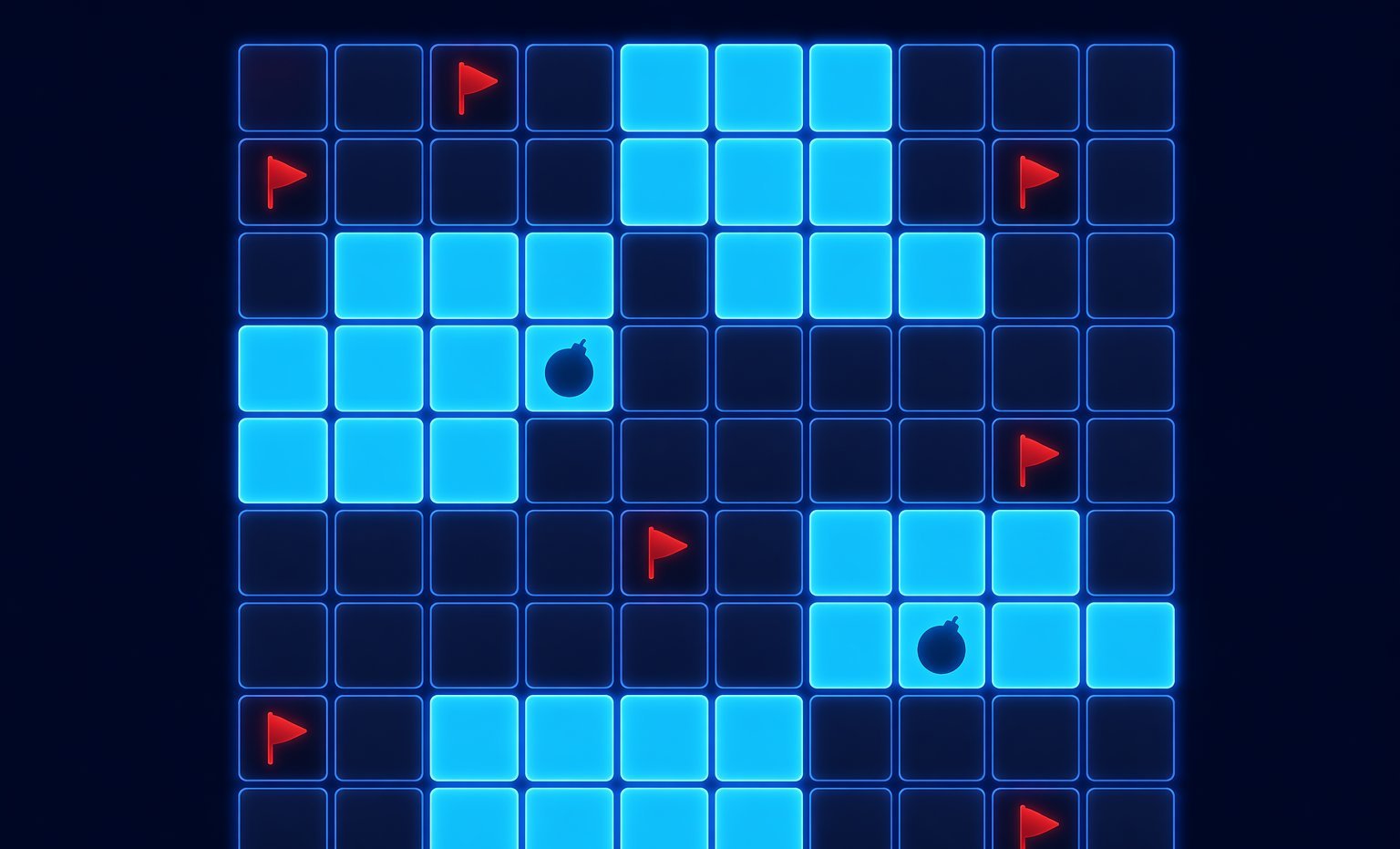
Minesweeper patterns are shortcuts for deductions you could prove square by square. Once you recognize them, you stop staring at every number from scratch and start seeing mines and safe spaces faster.
The 1-1 pattern
When two adjacent 1s touch the same group of hidden squares, they often tell you that a mine is shared between them and the outside squares are safe. The exact result depends on the surrounding revealed squares, but the idea is simple: if both numbers are satisfied by the same possible mine, extra hidden squares that only touch one clue may be safe.
Do not memorize 1-1 as a magic shape. Look at which hidden squares each number touches. If placing one mine satisfies both 1s, the rest of the touching squares can often be cleared.
The 1-2-1 pattern
The 1-2-1 is one of the most famous Minesweeper patterns. In a straight line along an edge of hidden squares, the two mines are usually under the two outside positions, and the middle position is safe. This works because the center 2 must touch two mines, while the neighboring 1s limit where those mines can be.
Once you learn it, 1-2-1 becomes a board opener. It turns a scary wall into two flags and one safe click, which often reveals the next chain of clues.
The 1-2-2-1 pattern
A 1-2-2-1 along a clean edge often means the two mines are under the two middle positions, while the outside positions are safe. This is another shape where the outside 1s restrict the mine placements and the 2s confirm the center pair.
As always, check the surrounding flags first. A pattern only works when the numbers are not already partly satisfied by mines elsewhere.
Edges and corners
Edges make patterns easier because there are fewer hidden neighbors. A number in the middle of the board can touch up to eight squares; a number on an edge touches fewer. Corners are even more constrained. That means edge clues often create forced moves earlier than open-center clues.
If you feel stuck, scan the border between revealed and hidden squares. Look for numbers that have only one or two unknown neighbors left. Those are more likely to produce certain flags or safe clicks than a large unopened area.
Use subtraction thinking
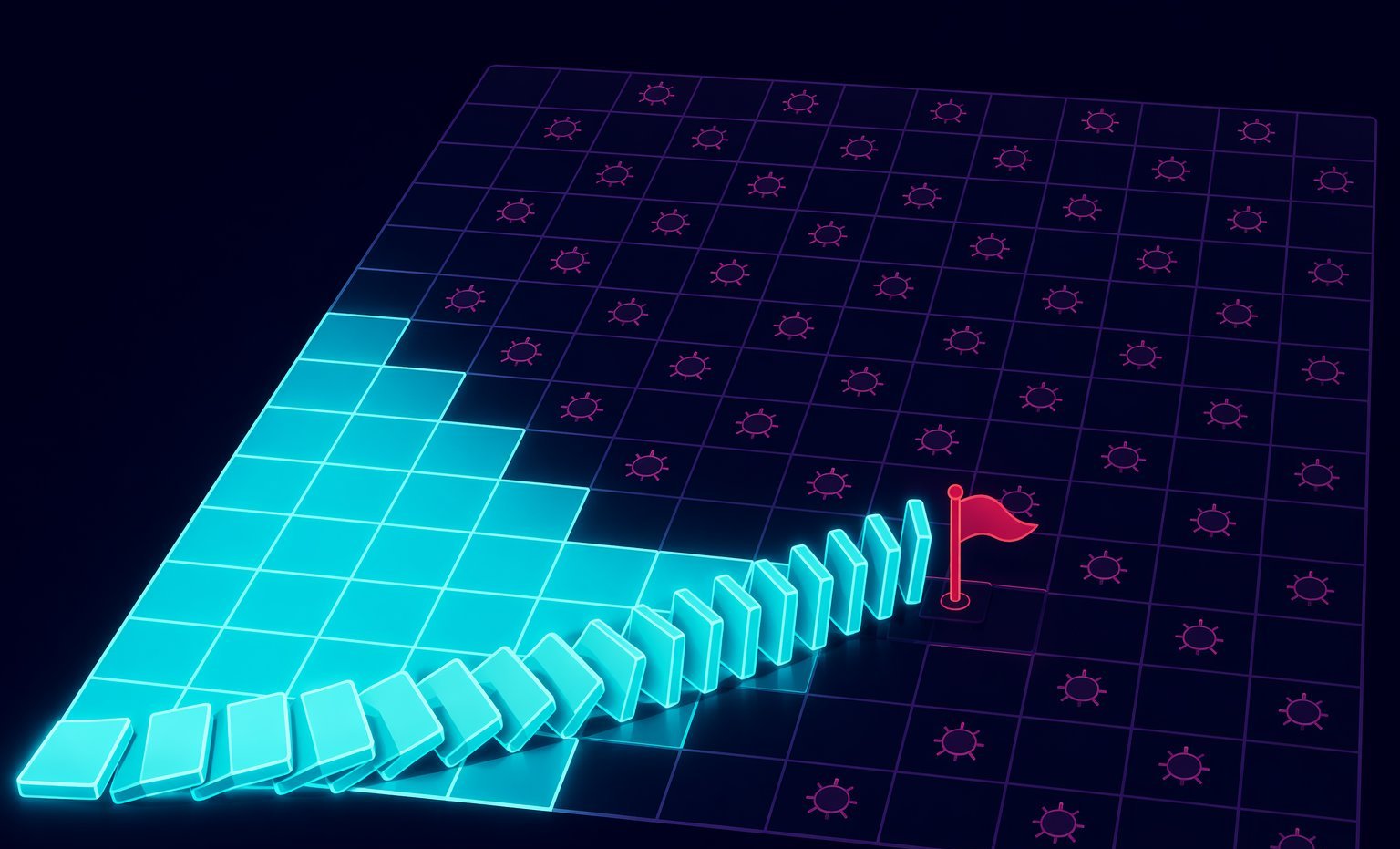
Many patterns are really subtraction. If a 2 and a neighboring 1 share some hidden squares, the extra mine required by the 2 must be in the squares the 1 does not touch. This is the logic behind many shapes that players memorize later. Learning subtraction lets you solve unfamiliar patterns instead of waiting for a perfect textbook 1-2-1.
Pattern mistakes to avoid
- Applying a pattern after one of the numbers already has a flag touching it.
- Ignoring hidden squares above, below or diagonally outside the pattern.
- Flagging because a shape looks familiar without checking the actual neighbors.
- Forgetting that patterns on open boards can differ from patterns along clean edges.
Patterns make Minesweeper faster, but they are not replacements for logic. They are compressed logic. When in doubt, slow down and count what each number still needs.
A practice routine for patterns
To learn patterns quickly, slow down instead of racing the timer. When you see a 1-2-1 or 1-2-2-1, say the deduction in plain language before clicking: "these outside squares are mines" or "this middle square is safe." That habit prevents blind memorization. After a few games, start looking for the same logic in messier shapes. The goal is not only recognizing famous patterns; it is understanding why the pattern works so you can solve boards that are almost, but not exactly, the same.
Ready to try the game?
Play Minesweeper