CPS Records and Score Milestones: What Counts as Fast?
There is no single official CPS world record — and that is exactly what makes the question interesting. A one-second drag-click burst, a ten-second butterfly score and a sixty-second standard-click result are three different sports. Below you will find the realistic milestones for each technique, the reasons famous record claims are so hard to verify, and a fair way to measure your own progress.

Why CPS records are hard to define
People search for the "CPS world record," but there is no single clean answer. A one-second drag-click burst, a ten-second butterfly score and a sixty-second standard-click result are different events. Hardware, debounce time, double-clicking, anti-cheat rules and timer length all change the number.
That is why this page treats CPS as score milestones instead of pretending that every claim online belongs in one global record table. The useful question is not "what is the biggest number anyone has posted?" It is "what is fast for this technique, duration and rule set?"
There is also no governing body for clicking. Track and field has World Athletics; speedcubing has the WCA; clicking has thousands of independent tests, browser timers, servers and videos, each with their own rules. A score set in a browser game with anti-cheat validation is simply not comparable to a number flashed on a YouTube thumbnail with unknown settings.
Realistic CPS milestones
- 4-7 CPS: normal for casual standard clicking.
- 8-10 CPS: fast standard clicking for most users.
- 10-14 CPS: common target range for trained jitter clicking.
- 12-18 CPS: strong butterfly clicking without extreme double-click abuse.
- 18-25+ CPS: high butterfly scores, often affected by debounce and switch behavior.
- 30+ CPS bursts: usually drag clicking or hardware-assisted switch chatter, not ordinary tapping.

Two things stand out when you look at verified, repeatable results. First, the gap between casual and trained clicking is smaller than most people expect — going from 6 to 9 CPS already puts you ahead of the majority of players. Second, the extreme numbers you see online almost always come from drag-click bursts measured over a single second, where the hardware does most of the work.
Each technique plays by its own rules
Standard clicking, jitter clicking, butterfly clicking and drag clicking are often compared side by side, but they measure different abilities. Standard clicking tests pure finger speed. Jitter clicking converts controlled forearm tension into rapid presses. Butterfly clicking alternates two fingers on one button, doubling input cadence. Drag clicking exploits friction so the switch registers a burst of chatter events as your finger slides across the button.
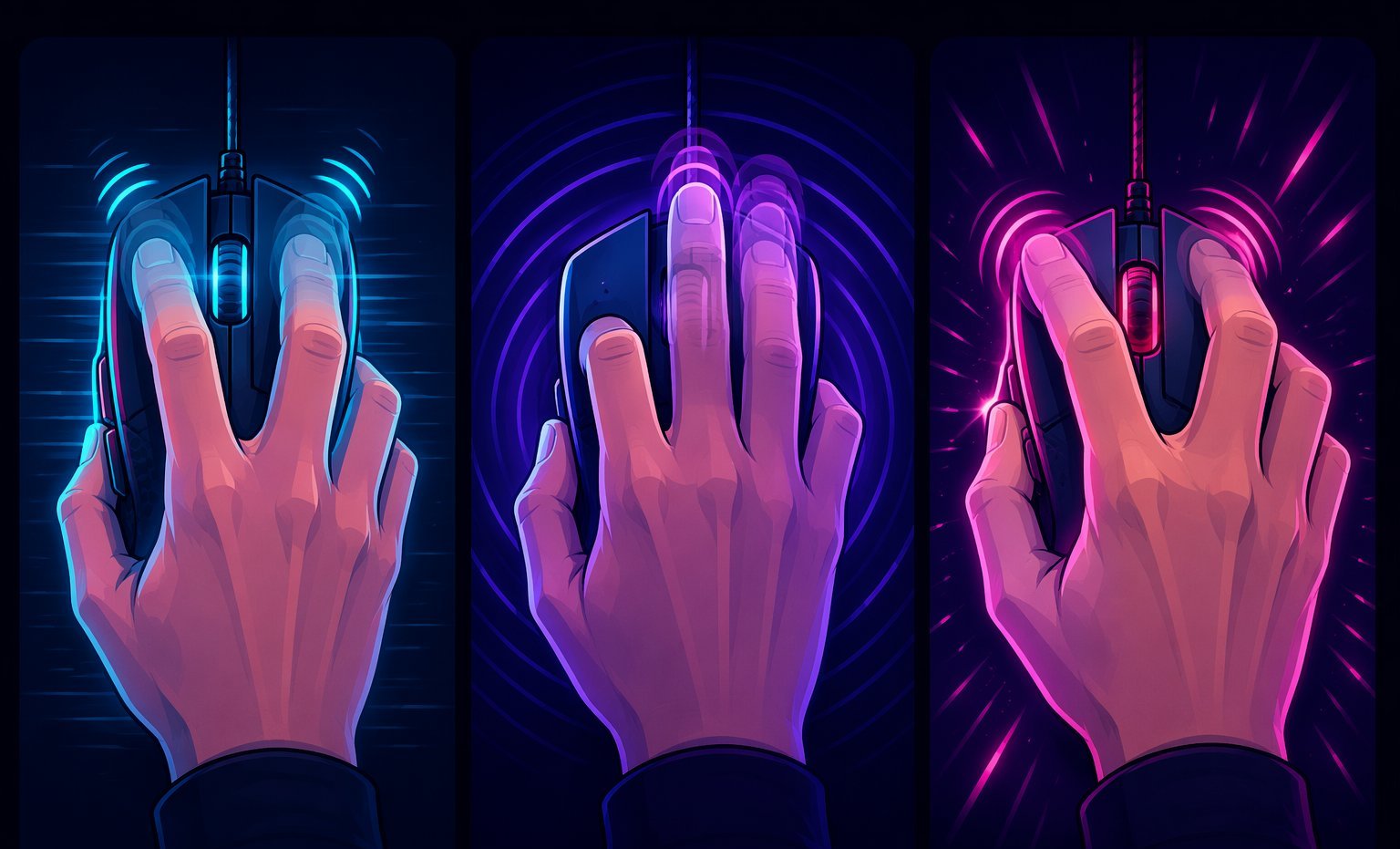
This is why a "world record" list that mixes techniques is meaningless. A 14 CPS jitter score reflects months of muscle training; a 40 CPS drag-click burst may reflect little more than a grippy mouse coating and 0 ms debounce firmware. Neither player is "better" — they are competing in different events.
Why 100 CPS claims are not the same as human tapping
A drag-click burst can produce huge numbers because the mouse switch reports rapid chatter while the finger slides across the button. That is interesting, but it is not the same as moving one finger 100 times in one second. When comparing scores, always ask: what technique, what mouse, what debounce, what duration and what validation?
There is also a hardware ceiling worth knowing about. Most gaming mice report to the PC at 1000 Hz — once every millisecond — while premium models reach 8000 Hz. A click only counts when the switch closes and the firmware reports it, so switch quality, debounce algorithm and polling rate all shape the final number before your skill even enters the picture.
How to make a score worth trusting
A trustworthy CPS score needs a fixed duration, a clear technique category, anti-cheat checks, and enough timing data to reject impossible submissions. A screenshot alone is weak evidence because it cannot show whether an autoclicker, edited page, macro or modified timer was involved.
Short tests are especially messy. In a one-second test, one timing quirk or one early burst can change the result dramatically. Longer tests make stamina and consistency more visible, but they still depend on hardware and rules. A fair leaderboard needs clear timing, repeated attempts, cheat detection and a consistent policy for techniques like drag clicking.
The bottom line
Chase milestones, not myths. Around 6-8 CPS is normal for casual users, 9-12 CPS is strong, and anything in the mid-teens with jitter or butterfly is genuinely elite for a human finger. Treat triple-digit claims as hardware demonstrations, not athletic records.
For personal progress, you do not need a world record. Track your best and your average in the same mode each week — the most impressive score is not the highest single screenshot but the one you can repeat across 5, 10 and 60 second tests. Consistency is harder to fake and far more useful in real play.
Ready to test it yourself?
Start a CPS Test