Average Reaction Time by Age: What Slows It Down
The short answer
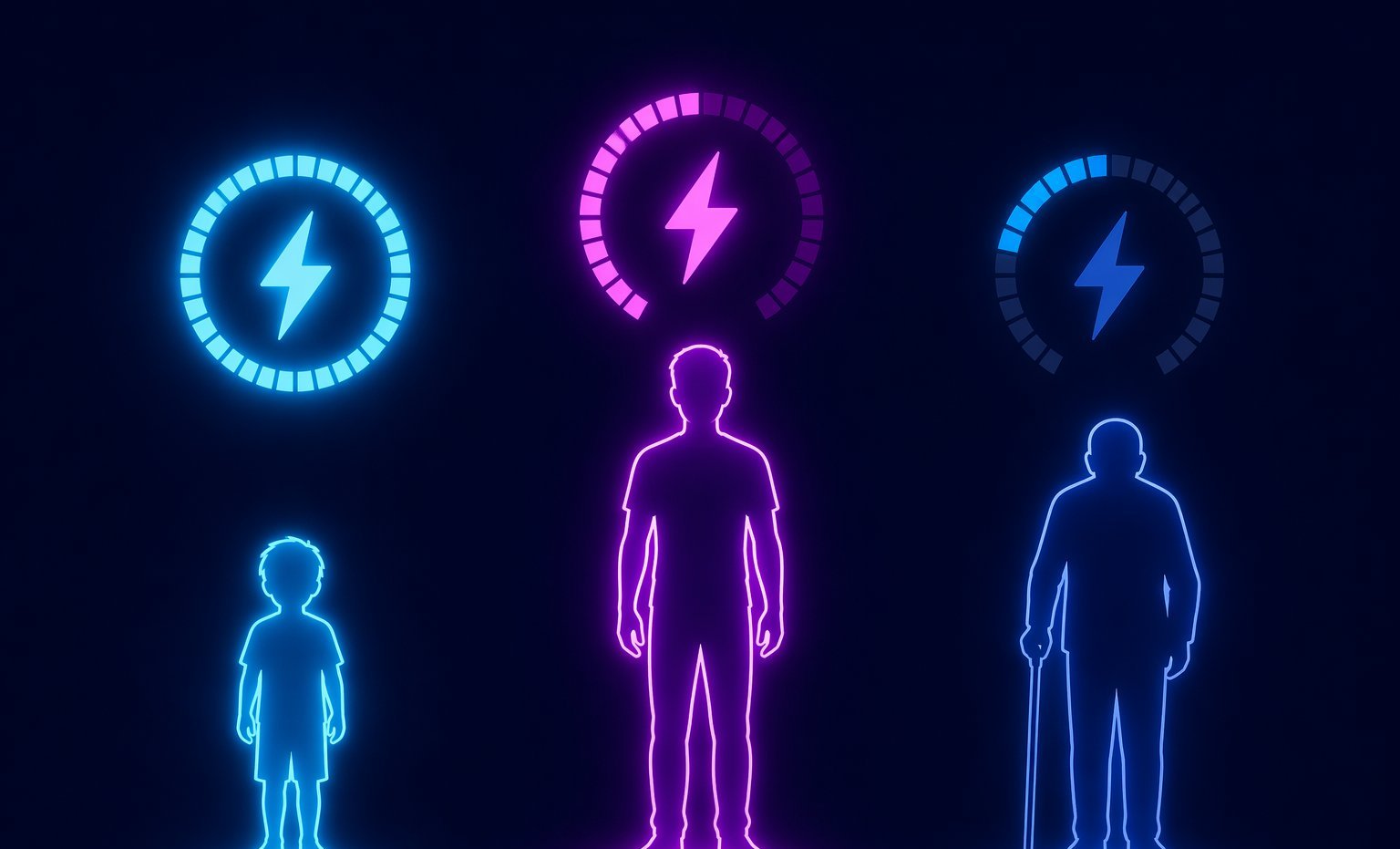
Reaction time generally improves through childhood, is strongest for many people from the late teens through the twenties, then slowly drifts upward with age. That does not mean an older player cannot beat a younger one. It means the average trend moves gradually because vision, attention, motor speed, sleep quality and processing speed all change over time.
A web reaction test should not be treated like a medical age chart. Your device can easily add tens of milliseconds. Still, age is useful context: if a 45-year-old and a 17-year-old get the same score, the older player is probably doing very well relative to their age group.
Approximate online-test bands by age
- Children and early teens: often inconsistent because attention control and motor timing are still developing.
- Late teens to twenties: commonly the fastest and most consistent group on simple reaction tasks.
- Thirties and forties: usually still competitive, with small slowdowns often hidden by practice and better focus.
- Fifties and beyond: averages tend to slow more clearly, especially when vision, fatigue or medication become factors.
The key word is "approximate." A gamer with years of rhythm, FPS or reaction training can outperform a younger casual user. A tired teenager on a phone can score worse than a rested adult on a fast monitor.
Why age changes the number
Age affects reaction time through several small bottlenecks rather than one giant switch. Visual processing may become slower, attention can be harder to sustain, muscles take longer to fire, and recovery from fatigue takes longer. Choice reaction tasks slow more than simple tasks because they add decision-making on top of raw response speed.
The good news: much of what players care about is trainable or controllable. You may not reverse biology, but you can sleep better, reduce input lag, practice the exact task, keep your hand relaxed and learn to anticipate patterns.
How to compare fairly
Take several attempts at the same time of day, on the same device, using the same hand and input method. Compare your median score, not only your best. If you want an age-aware goal, aim first for consistency: fewer false starts, fewer slow lapses, and a tighter range across ten attempts.
For sharing with friends, age makes the challenge more interesting. A simple leaderboard can be unfair, but "best median score in your age group" or "biggest improvement this week" is a better contest.
How to compare age groups fairly
Age averages are interesting, but they are easy to misread. A teenager on a 144 Hz monitor with a light gaming mouse can look much faster than an adult using a laptop trackpad, even if their nervous systems are not dramatically different. For a fair comparison, keep the same device, same hand position, same browser and same number of attempts. Use the median result from several tries instead of the single best click.
Children and younger teens may also vary more because the test itself is new to them. Older adults may be slower on the first attempt but steadier after a few practice rounds. That is why the best question is not only "what is normal for my age?" but "what is normal for me on this setup when I am rested?"
What age does not explain
Age is only one part of reaction speed. Sleep, caffeine, stress, fitness, gaming experience, vision, screen refresh rate and input lag can all move your score. A tired 20-year-old can be slower than a focused 45-year-old. A player who practices timing games can also react more consistently because they know how to stay ready without guessing early.
If your score feels worse than expected, do not jump straight to age as the explanation. Test again after sleep, try a different mouse, close heavy apps, and compare several days. Reaction time is noisy, and a useful baseline needs more than one quick run.
Ready to measure your reaction time?
Take Reaction Test